Exact2Pass

Last Update 13 hours ago Total Questions : 163
The Fortinet NSE 7 - Enterprise Firewall 7.0 content is now fully updated, with all current exam questions added 13 hours ago. Deciding to include NSE7_EFW-7.0 practice exam questions in your study plan goes far beyond basic test preparation.
You'll find that our NSE7_EFW-7.0 exam questions frequently feature detailed scenarios and practical problem-solving exercises that directly mirror industry challenges. Engaging with these NSE7_EFW-7.0 sample sets allows you to effectively manage your time and pace yourself, giving you the ability to finish any Fortinet NSE 7 - Enterprise Firewall 7.0 practice test comfortably within the allotted time.
Refer to the exhibit, which contains partial output from an IKE real-time debug.
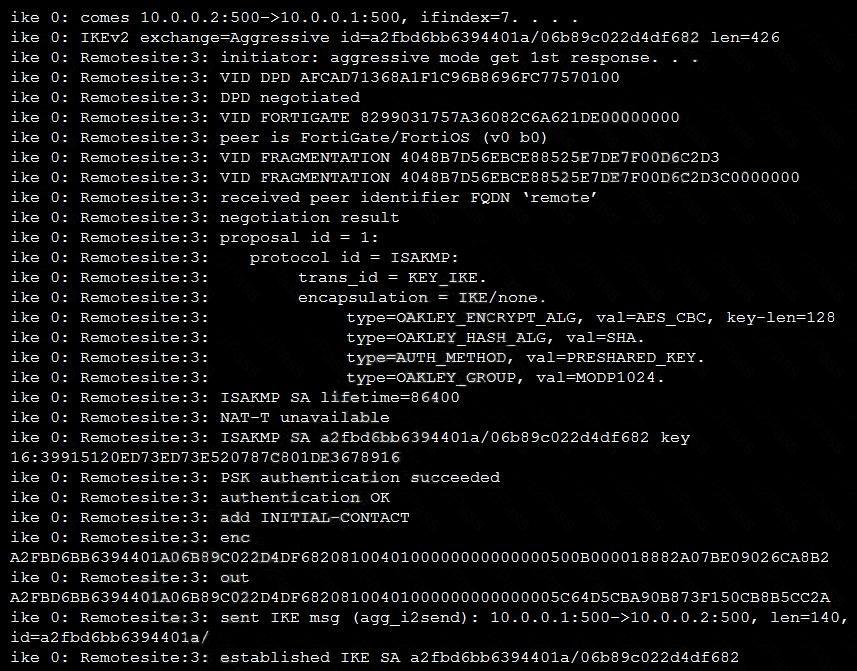
Which two statements about this debug output are correct? (Choose two.)
Refer to the exhibit, which shows the output of a BGP debug command.
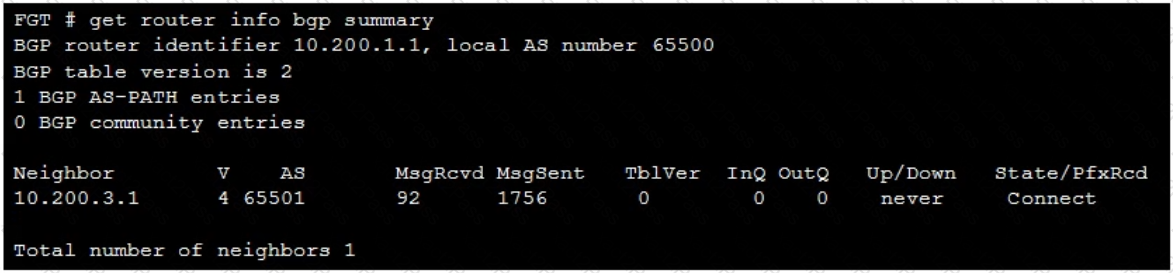
Which statement explains why the state of the 10.200.3.1 peer is Connect?
Refer to the exhibits, which show the configuration on FortiGate and partial session information for internet traffic from a user on the internal network.
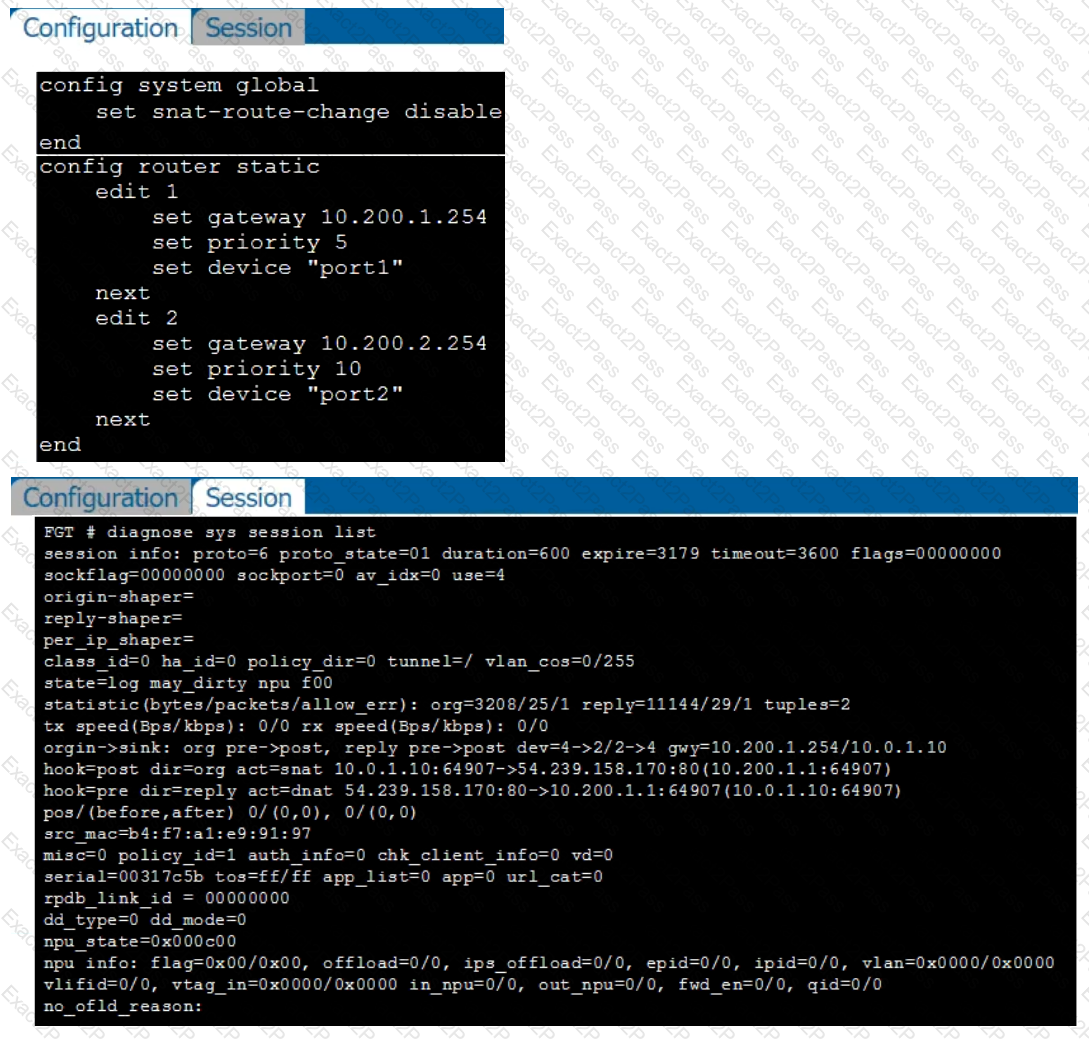
If the priority on route ID 2 were changed from 10 to 0, what would happen to traffic matching that user session?
Which two statements about the Security Fabric are true? (Choose two.)
What events are recorded in the crashlogs of a FortiGate device? (Choose two.)
Which two statements about OCVPN are true? (Choose two.)
An administrator has decreased all the TCP session timers to optimize the FortiGate memory usage. However, after the changes, one network application started to have problems. During the troubleshooting, the administrator noticed that the FortiGate deletes the sessions after the clients send the SYN packets, and before the arrival of the SYN/ACKs. When the SYN/ACK packets arrive to the FortiGate, the unit has already deleted the respective sessions. Which TCP session timer must be increased to fix this problem?
An administrator added the following Ipsec VPN to a FortiGate configuration:
configvpn ipsec phasel -interface
edit " RemoteSite "
set type dynamic
set interface " portl "
set mode main
set psksecret ENC LCVkCiK2E2PhVUzZe
next
end
config vpn ipsec phase2-interface
edit " RemoteSite "
set phasel name " RemoteSite "
set proposal 3des-sha256
next
end
However, the phase 1 negotiation is failing. The administrator executed the IKF real time debug while attempting the Ipsec connection. The output is shown in the exhibit.
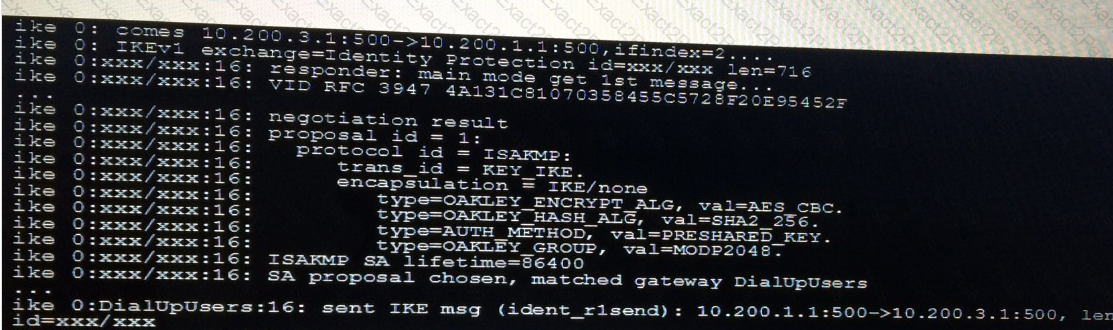

What is causing the IPsec problem in the phase 1 ?
Examine the output from the ' diagnose debug authd fsso list ' command; then answer the question below.
# diagnose debug authd fsso list —FSSO logons-IP: 192.168.3.1 User: STUDENT Groups: TRAININGAD/USERS Workstation: INTERNAL2. TRAINING. LAB The IP address 192.168.3.1 is NOT the one used by the workstation INTERNAL2. TRAINING. LAB.
What should the administrator check?
A FortiGate device has the following LDAP configuration:
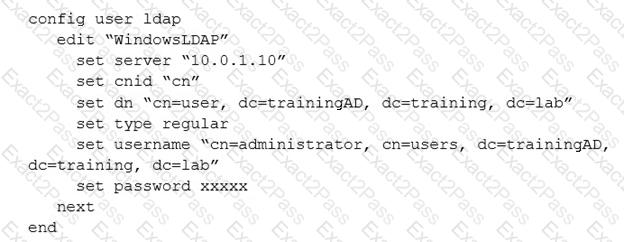
The LDAP user student cannot authenticate. The exhibit shows the output of the authentication real time debug while testing the student account:
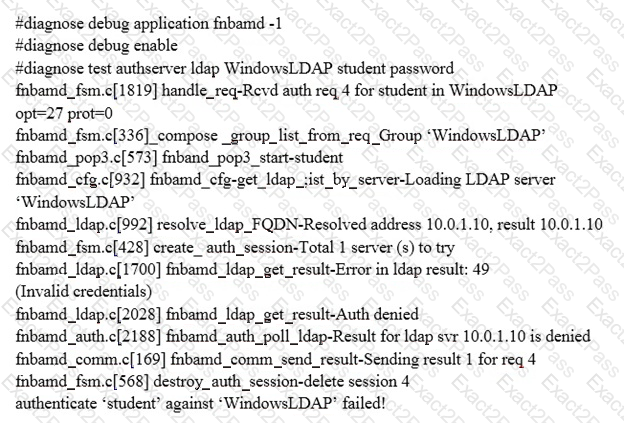
Based on the above output, what FortiGate LDAP settings must the administer check? (Choose two.)

