Exact2Pass

Last Update 13 hours ago Total Questions : 379
The Designing Cisco Enterprise Networks content is now fully updated, with all current exam questions added 13 hours ago. Deciding to include 300-420 practice exam questions in your study plan goes far beyond basic test preparation.
You'll find that our 300-420 exam questions frequently feature detailed scenarios and practical problem-solving exercises that directly mirror industry challenges. Engaging with these 300-420 sample sets allows you to effectively manage your time and pace yourself, giving you the ability to finish any Designing Cisco Enterprise Networks practice test comfortably within the allotted time.
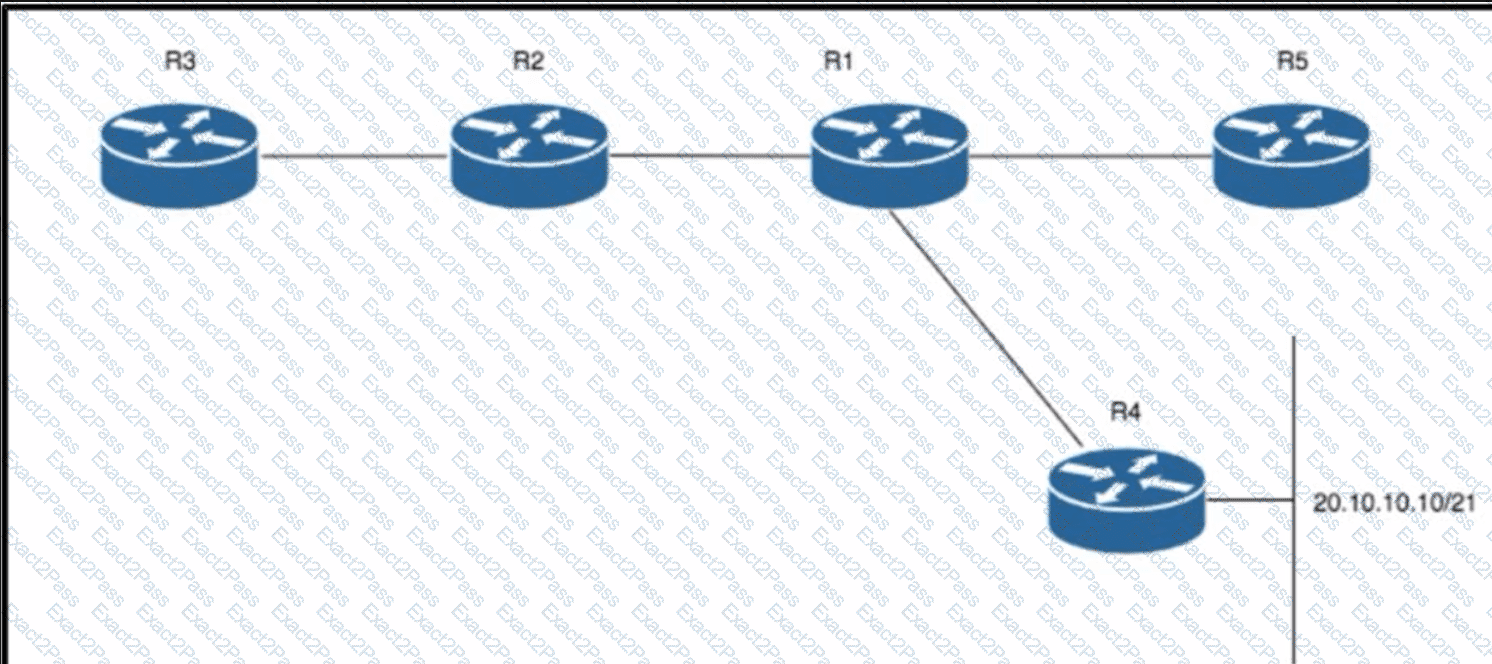
Refer to the exhibit. A network architect is preparing a network design based on EIGRP. Routers are connected using a Cat6a cable type and the inter-router connection speed is limited to 10 Mbps due to distance. During the pilot phase, a DUAL-3-SIA error message is visible. Which action must the engineer take to create a stable design?
What is the role of a control-plane node in a Cisco SD-Access architecture?
What is the purpose of Cisco vBond as a Session Traversal Utilities for NAT server?
A company ' s security policy requires that all connections between sites be encrypted in a manner that does not
require maintenance of permanent tunnels. The sites are connected through a private MPLS-based service that
uses a dynamically changing key and spoke-to-spoke communication. Which type of transport encryption must
be used in this environment?
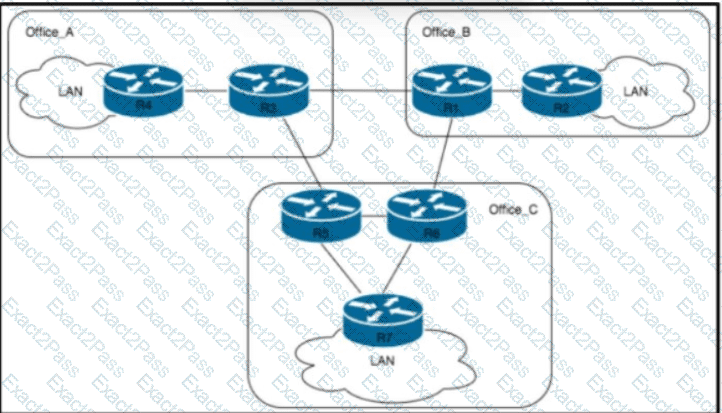
Refer to the exhibit. A company has some offices that are connected via dark fiber in New York. A network architect must optimize the network design based on the EIGRP routing protocol. The network has hierarchical addressing between 10 and 12 routers in each office. Routing convergence time must be at the minimum. What must the network architect do to reduce the query range?
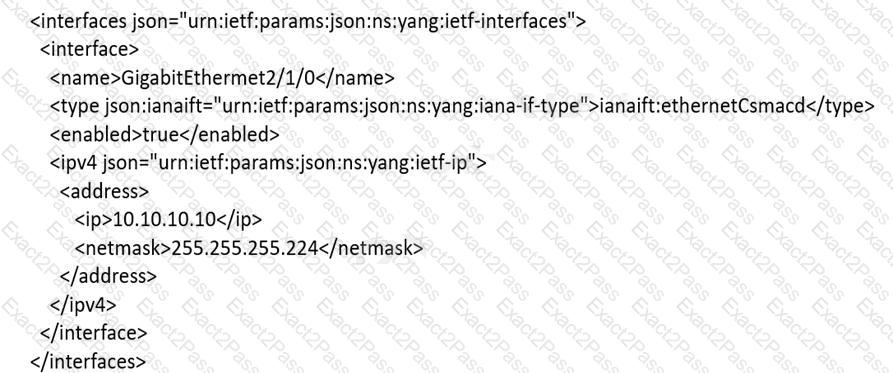
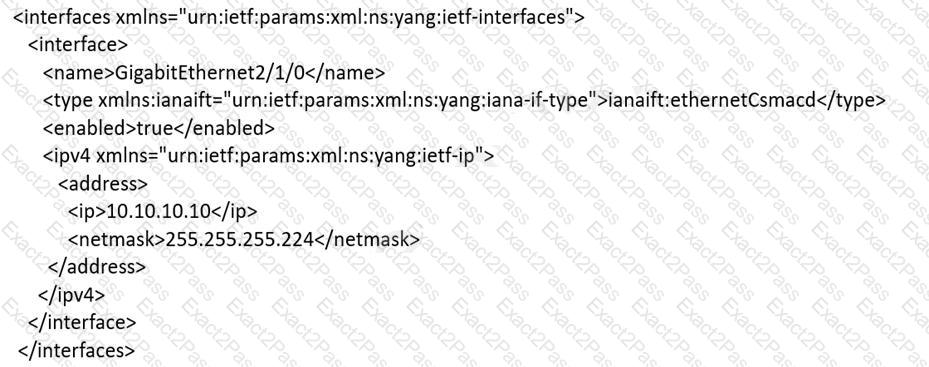
An engineer must use YANG with an XML representation to configure a Cisco IOS XE switch with these specifications:
IP address 10.10.10.10/27 configured on the interface GigabitEthernet2/1/0
connectivity from a directly connected host 10.10.10.1/27
Which YANG data model set must the engineer choose?
A)
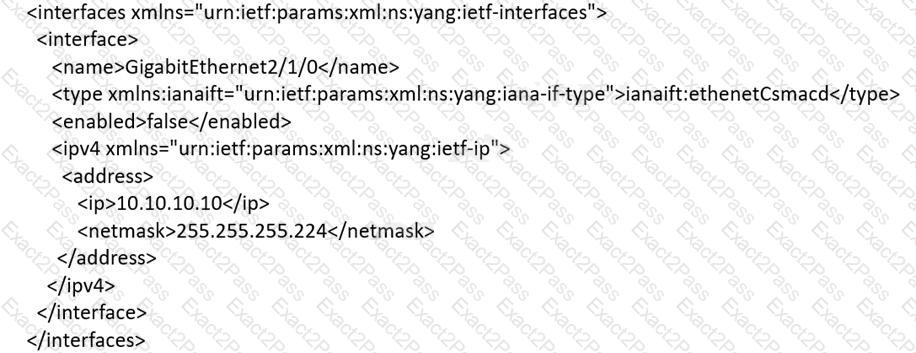
B)
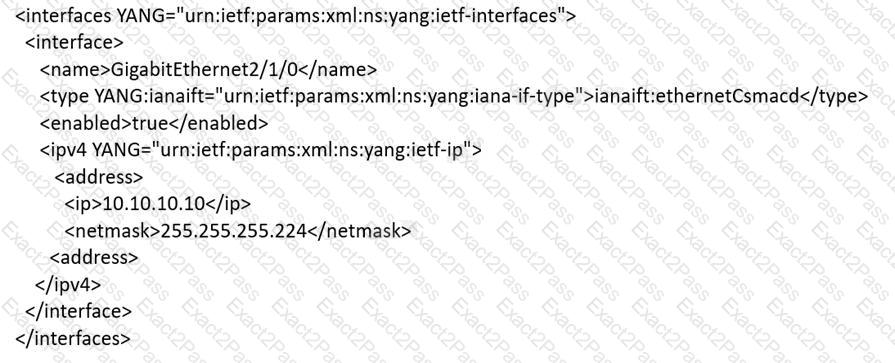
C)
D)
Which two statements about VRRP advertisements are true? (Choose two.)
A network engineer must segregate three interconnected campus networks using IS-IS routing. A two-layer hierarchy must be used to support large routing domains and to avoid more specific routes from each campus network being advertised to other campus network routers automatically. Which two actions does the engineer take to accomplish this segregation? (Choose two.)
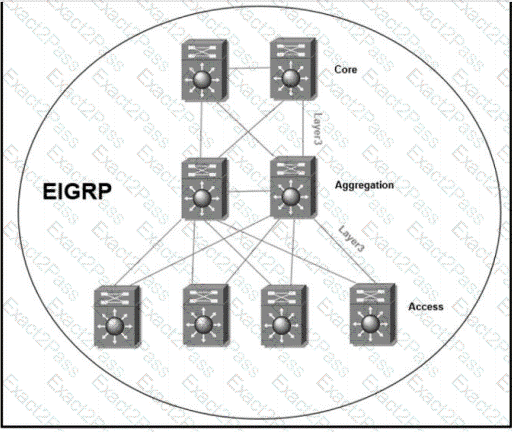
Refer to the exhibit. The full EIGRP routing table is advertised throughout the network. Currently, users experience data loss when any one link in the network fails. An architect optimizes the network to reduce the impact when a link fails. Which solution should the architect include in the design?
What is the purpose of the fabric control plane in a Cisco SD-Access architecture?

