Exact2Pass

Last Update 20 hours ago Total Questions : 1337
The Certified Associate in Project Management (CAPM) content is now fully updated, with all current exam questions added 20 hours ago. Deciding to include CAPM practice exam questions in your study plan goes far beyond basic test preparation.
You'll find that our CAPM exam questions frequently feature detailed scenarios and practical problem-solving exercises that directly mirror industry challenges. Engaging with these CAPM sample sets allows you to effectively manage your time and pace yourself, giving you the ability to finish any Certified Associate in Project Management (CAPM) practice test comfortably within the allotted time.
Which is an example of an internal enterprise environmental factor?
Market Share brand recognition
Factory location
Local government regulation
Industry research
According to the PMBOK® Guide, Enterprise Environmental Factors (EEFs) refer to conditions, not under the control of the project team, that influence, constrain, or direct the project. These are categorized into Internal (within the organization) and External (outside the organization).
Internal EEFs (Choice B): These are factors within the entity ' s own environment. Factory location, geographic distribution of facilities, and existing infrastructure are classic examples of internal EEFs. Other examples include organizational culture, structure, governance, resource availability, and employee capability. Since the factory belongs to the organization, its location and capabilities are internal constraints the project manager must work within.
Market Share / Brand Recognition (Choice A): While this is related to the organization, it is generally considered an External EEF (specifically under " Market Conditions " ). It reflects the organization ' s standing in the external marketplace compared to competitors.
Local Government Regulation (Choice C): This is a definitive External EEF. It involves legal restrictions, building codes, or environmental regulations imposed by an outside governing body that the project must comply with.
Industry Research (Choice D): This is an External EEF. It falls under " Academic Research " or " Market Research, " providing data from the external environment that might influence the project’s direction or technology choices.
Understanding whether a factor is internal or external helps the project manager determine the level of influence they might have and where the primary constraints on the project ' s success are originating.
An electronics firm authorizes a new project to develop a faster, cheaper, and smaller laptop after improvements in the industry and electronics technology. With which of the following strategic considerations is this project mainly concerned?
Customer request
Market demand
Technological advance
Strategic opportunity
According to the PMBOK® Guide, projects are typically authorized as a result of one or more strategic considerations (often documented in a Business Case). These factors, known as " Project Initiatives " or " Business Needs, " include:
Technological Advance: This occurs when an organization authorizes a project to take advantage of new scientific or technical breakthroughs to improve its products or services. In this scenario, the firm is specifically responding to improvements in electronics technology to create a product that is faster, cheaper, and smaller.
Contextual Alignment: While creating a better laptop might meet a " Market Demand " (Choice B) or represent a " Strategic Opportunity " (Choice D), the primary driver cited in the question is the shift in industry and electronics technology. Therefore, the project is categorized under Technological Advance.
Other Strategic Considerations defined by PMI:
Market Demand: e.g., An automaker authorizing a project to build more fuel-efficient cars in response to a gasoline shortage.
Customer Request: e.g., An electric utility authorizing a project to build a new substation to serve a new industrial park.
Legal Requirement: e.g., A chemical manufacturer authorizing a project to establish guidelines for the handling of a new toxic material.
Social Need: e.g., A non-governmental organization authorizing a project to provide potable water systems to communities during a crisis.
In this specific case, because the impetus for the project is the technical improvement in the electronics field, Choice C is the most accurate verified answer.
If the most likely duration of an activity is five weeks, the best-case duration is two weeks, and the worst-case duration is 14 weeks, how many weeks is the expected duration of the activity?
One
Five
Six
Seven
According to the PMBOK® Guide, specifically within the Estimate Activity Durations process, the Three-Point Estimating technique is used to improve the accuracy of activity duration estimates by considering estimation uncertainty and risk.
There are two commonly used formulas for three-point estimating. Unless otherwise specified, the PERT (Program Evaluation and Review Technique) or Beta Distribution is typically used in PMP exams:
Optimistic ($O$): 2 weeks (best-case scenario)
Most Likely ($M$): 5 weeks (realistic scenario)
Pessimistic ($P$): 14 weeks (worst-case scenario)
The Beta Distribution (PERT) Formula:
$$E = \frac{O + 4M + P}{6}$$
Step-by-Step Calculation:
Multiply the Most Likely duration by 4: $4 \times 5 = 20$
Add the Optimistic and Pessimistic durations: $2 + 20 + 14 = 36$
Divide the total by 6: $36 / 6 = 6$
The expected duration ($E$) is 6 weeks.
Note on Triangular Distribution:
If the question had asked for a simple average (Triangular Distribution), the formula would be $(O + M + P) / 3$.
Calculation: $(2 + 5 + 14) / 3 = 21 / 3 = 7$ (Choice D). However, PMP standards favor the weighted Beta/PERT average because it places more weight on the " Most Likely " outcome, making it more statistically accurate for most projects.
Analysis of choices:
Choice A (One): Incorrect calculation.
Choice B (Five): This is just the " Most Likely " value, not the weighted expected duration.
Choice C (Six): Correct based on the PERT formula.
Choice D (Seven): Incorrect as it represents the simple Triangular average rather than the standard PERT estimate.
A project team conducts regular standup meetings to keep everyone updated on what each one of them is working on. What type of communication is this?
Informal
Unofficial
Formal
Hierarchical
According to the PMBOK® Guide (6th and 7th Editions), communications are categorized by their level of structure and the nature of the interaction. While a standup meeting is a " scheduled " event, it is classified as Informal Communication because of its nature and intent.
In Agile and adaptive environments, standup meetings (Daily Scrums) are designed to be quick, high-frequency, and low-overhead. Unlike a " Formal " meeting which requires detailed minutes, a structured agenda, and official distribution to all stakeholders, a standup is a peer-to-peer coordination session.
Why Standup Meetings are considered Informal:
Ad-hoc/Minimal Documentation: These meetings typically do not result in formal minutes or official project records.
Peer-to-Peer Focus: The primary goal is coordination among the project team, rather than official reporting to management or external stakeholders.
Communication Style: They often involve verbal exchange and whiteboard/digital board updates rather than formal presentations.
Analysis of Distractors:
B (Unofficial): This is not a standard term used by PMI to classify communication types. Communication is generally classified as Formal/Informal or Internal/External.
C (Formal): Formal communication is reserved for official reports, briefings, formal meetings with clients, and documented legal or contract-related exchanges. These require a higher level of preparation and audit trails than a daily standup.
D (Hierarchical): This refers to the direction of communication (upward or downward through the organization ' s chain of command). A standup is typically horizontal or " flat " because it involves the team coordinating with one another, rather than a superior issuing orders to subordinates.
At the end of the third iteration, the project team gathers to discuss the stories to be implemented in the next iteration. What should the team do during this session?
Run a spike to ensure all information available is correct and then decide which stories to implement.
Develop a user story analysis based on the work done, depicting the current status, S-curve, schedule variance (SV), and planned value (PV).
Plan the backlog by estimating and reprioritizing the user stories as new information becomes available.
Bring up all risks for implementing the user stories and discuss possible solutions.
According to the Agile Practice Guide and the PMBOK® Guide, specifically regarding Backlog Refinement and Sprint Planning, Agile projects rely on continuous grooming of the work.
Backlog Refinement (Grooming): As the team prepares for the next iteration, they must ensure the Product Backlog is " Ready. " This involves Reprioritizing stories based on the value delivered in the previous three iterations and any new information or feedback received from stakeholders.
Estimation: During these sessions, the team provides or updates estimates (often in Story Points) for the upcoming work. Since Agile environments are change-driven, a story that was estimated two months ago may need a new estimate based on what the team learned during the first three iterations.
Progressive Elaboration: Agile planning is not a one-time event. It happens at the beginning of every iteration. This ensures the team is always working on the highest-priority items that provide the most business value.
Analysis of other options:
Option A: A Spike is a specialized task used to research a technical issue or reduce risk. While useful, it is not the standard activity for a general session discussing the next iteration ' s stories unless a specific unknown was identified.
Option B: Terms like S-curve, SV, and PV are artifacts of Earned Value Management (EVM), which is primarily used in Predictive (Waterfall) project management. In an Agile iteration meeting, the focus is on the backlog and flow, not traditional variance analysis.
Option D: While risks are discussed during planning, simply " bringing up all risks " is only one part of the process. The core objective of the session described (discussing stories for the next iteration) is the broader act of Backlog Planning and Refinement.
Per PMI standards, the project team must maintain a dynamic and prioritized backlog. By estimating and reprioritizing user stories at the end of an iteration, the team ensures the next iteration is aligned with the most current project goals and technical realities.
Definitions of probability and impact, revised stakeholder tolerances, and tracking are components of which subsidiary plan?
Cost management plan
Quality management plan
Communications management plan
Risk management plan
According to the PMBOK® Guide, specifically the Plan Risk Management process, the Risk Management Plan is a component of the project management plan that describes how risk management activities will be structured and performed.
Definitions of Probability and Impact: To ensure consistency and quality of the qualitative risk analysis, the project team must define the levels of probability and impact. These definitions are tailored to the individual project and the organization ' s objectives and are documented in the Risk Management Plan.
Revised Stakeholder Tolerances: Organizations and stakeholders have different appetites for risk. The Risk Management Plan documents these tolerances (often expressed as risk thresholds) and may be revised specifically for the project to ensure the risk management process is aligned with stakeholder expectations.
Tracking: This component describes how risk activities will be recorded for the benefit of the current project and how risk management processes will be audited. It ensures that the " lessons learned " regarding risk are captured.
Other Components: The Risk Management Plan also includes the methodology, roles and responsibilities, budgeting for risk, timing of risk activities, and the Risk Breakdown Structure (RBS).
Comparison with other options:
A. Cost management plan: This plan defines how project costs will be planned, structured, and controlled. While it may include " contingency " for risks, it does not define the qualitative scales of probability and impact.
B. Quality management plan: This identifies the quality requirements and/or standards for the project and its deliverables. It focuses on processes and metrics for quality, not risk uncertainty.
C. Communications management plan: This describes how, when, and by whom information about the project will be administered and distributed. While it may communicate risk status, it does not establish the framework for analyzing risk itself.
The project manager is working with some functional managers and stakeholders on the resource management plan Which elements may be included in this plan?
Team values, team agreements, and conflict resolution process
Conflict resolution process, communication guidelines, and meeting schedules
Team roles and responsibilities, team management, and training plan
Resource requirements, resource assignments, and team performance assessments
According to the PMBOK® Guide, the Resource Management Plan is a component of the project management plan that provides guidance on how project resources should be categorized, allocated, managed, and released. It is created during the Plan Resource Management process.
The plan typically includes, but is not limited to:
Identification of Resources: Methods for identifying and quantifying the physical and team resources needed.
Roles and Responsibilities: Defining the Role (the function assumed by a person), Authority (the right to apply resources or make decisions), Responsibility (the assigned duties), and Competency (the skills and capacity required).
Project Organization Charts: A graphic display of project team members and their reporting relationships.
Team Management: Guidance on how team resources should be defined, staffed, managed, and eventually released.
Training Plan/Strategies: If the team lacks the necessary competencies, the plan outlines how that training will be provided.
Recognition and Rewards: The strategy for how team members will be motivated and recognized for their contributions.
Analysis of Other Options:
A. Team values, team agreements, and conflict resolution process: These elements are specifically part of the Team Charter, not the Resource Management Plan. The Team Charter focuses on social norms and behavioral expectations.
B. Conflict resolution process, communication guidelines, and meeting schedules: Communication guidelines and meeting schedules are primary components of the Communications Management Plan.
D. Resource requirements, resource assignments, and team performance assessments: These are Project Documents, not components of the Resource Management Plan. " Resource Requirements " is an output of Estimate Activity Resources, and " Assignments " are an output of Acquire Resources. The Plan describes how to do these things, but does not contain the specific assignments themselves.
An output of the Create WBS process is:
Scope baseline.
Project scope statement.
Organizational process assets.
Requirements traceability matrix.
According to the PMBOK® Guide, the Create WBS (Work Breakdown Structure) process is the process of subdividing project deliverables and project work into smaller, more manageable components.
The primary output of this process is the Scope Baseline. The Scope Baseline is a component of the project management plan and consists of three specific elements:
Project Scope Statement: Includes the description of the project scope, major deliverables, assumptions, and constraints.
Work Breakdown Structure (WBS): A hierarchical decomposition of the total scope of work to be carried out by the project team.
WBS Dictionary: A document that provides detailed deliverable, activity, and scheduling information about each component in the WBS.
Analysis of other choices:
Choice B (Project scope statement): While part of the scope baseline, the Project Scope Statement itself is a primary output of the Define Scope process, which occurs before Create WBS.
Choice C (Organizational process assets): These are typically inputs to the Create WBS process (such as WBS templates or policies), rather than outputs.
Choice D (Requirements traceability matrix): This is an output of the Collect Requirements process. It is used as an input to Create WBS to ensure that every requirement is linked to a specific WBS element.
In summary, because the Create WBS process " finalizes " the WBS and WBS Dictionary, it integrates them with the previously defined Scope Statement to form the Scope Baseline.
Which tools and techniques will a project manager use to develop a project charter?
Project manager experience, expert judgment, scope statement, and meetings
Lessons learned database. Interpersonal and team skills, cost baseline, and meetings
Expert judgment, data gathering. scope statement, schedule baseline, and meetings
Expert judgment, data gathering. interpersonal and team skills, and meetings
According to the PMBOK® Guide, the Develop Project Charter process is the process of developing a document that formally authorizes the existence of a project and provides the project manager with the authority to apply organizational resources to project activities.
Because this process occurs at the very beginning of the project (Initiation), the tools and techniques focus on high-level analysis and consensus-building rather than detailed project management baselines.
Expert Judgment: Defined as judgment provided based upon expertise in an application area, knowledge area, or industry. It is used to process the information from the business case and agreements.
Data Gathering: Includes techniques such as:
Brainstorming: To identify risks, participants, and success criteria.
Focus Groups: To bring together stakeholders and subject matter experts to learn about the project expectations.
Interviews: To obtain information from high-level stakeholders.
Interpersonal and Team Skills: Specifically Conflict Management (to align stakeholders on objectives), Facilitation (to lead the group toward a decision), and Meeting Management.
Meetings: Used to discuss project objectives, success criteria, key deliverables, and high-level milestones with key stakeholders.
Analysis of Other Options:
A and C. Scope statement / Schedule baseline: These are incorrect because the Scope Statement and Baselines are outputs of the Planning process group. They do not exist yet when the Project Charter is being developed; in fact, the Charter is what provides the authority to create these documents later.
B. Cost baseline: Similar to the above, the cost baseline is a result of the Determine Budget process in Planning. Furthermore, while the Lessons Learned database is an input (part of OPA), it is not a tool or technique.
In addition to the project charter, what other artifact is produced as a result of the Develop Project Charter process ' ?
Assumption log
Milestone list
Business case
Risk register
According to the PMBOK® Guide (specifically the 6th and 7th Editions), the Develop Project Charter process is the very first step in the project life cycle. While the primary output is the Project Charter itself, there is a second, critical output that is often overlooked in study.
The Assumption Log: This is the secondary output of the Develop Project Charter process. Strategic and high-level business assumptions and constraints are typically identified in the business case before the project is initiated and will flow into the project charter. Throughout the process of creating the charter, the project manager uses the Assumption Log to document all high-level technical and operational assumptions and constraints that will affect the project.
Purpose: It serves as a repository for any factor that is considered to be true, real, or certain without proof or demonstration. Because these assumptions are not yet proven, they represent potential risks that must be validated during the planning phase.
Why other options are incorrect:
Option B: Milestone list: While a high-level summary of milestones is contained within the Project Charter, the formal " Milestone List " is an output of the Define Activities process in the Planning process group.
Option C: Business case: The Business Case is an input to the Develop Project Charter process, not an output. It is a business document created by the sponsor or organization to justify the investment before the project manager even starts the charter.
Option D: Risk register: The Risk Register is an output of the Identify Risks process. While the Project Charter contains " high-level overall project risks, " the detailed register is not created until the planning phase.
A project manager is developing the work breakdown structure (WBS) for a project. The team is asking at what level should they decompose their assigned work.
What should the project manager answer?
Activity level
Deliverable level
Task level
Work package level
This question reinforces a fundamental concept in the PMBOK® Guide regarding the structure of the Work Breakdown Structure (WBS). While a project manager may be tempted to break work down as far as possible, there is a specific formal " stopping point " in the WBS hierarchy.
Why Choice D is correct:
The Definition of a Work Package: The Work Package is the lowest level of the WBS. It is the point at which cost and duration can be estimated with high confidence and where the work can be effectively managed and controlled.
Control Accounts: Work packages are often grouped into Control Accounts for management and reporting purposes, but the decomposition process itself stops once you reach a manageable " unit " of a deliverable.
Accountability: A work package represents a specific deliverable or project work component that can be assigned to a single person or a specific team.
Analysis of other options:
A (Activity level): Activities are the specific actions required to complete a work package. While work packages are decomposed into activities, this happens during the Define Activities process in Schedule Management, not during the creation of the WBS.
B (Deliverable level): " Deliverable " is a generic term. While the WBS is deliverable-oriented, it contains many levels of deliverables (from the whole project down to sub-components). The specific name for the lowest level of that decomposition is the work package.
C (Task level): Similar to activities, " tasks " are generally considered smaller units of work within an activity or work package. Breaking a WBS down to the task level is often considered micromanagement and makes the WBS too complex to maintain.
Key Concept: The Project Management Institute (PMI) teaches that proper decomposition is a balance. By stopping at the Work Package level (Choice D), the project manager ensures that the scope is clearly defined without the overhead of tracking every minute task, providing the perfect foundation for the Scope Baseline.
During project planning, team members seemed clear on deliverables. However, as the project progressed deeper into the execution phase, team members expressed the need for smaller components to better understand what must be delivered.
What should the project manager do?
Inform the stakeholders that the stakeholder register needs to be recreated, as the team does not understand the requirements.
Share the project management plan with the team members again to bring them up to speed on the requirements.
Schedule additional meetings with the customer to explain the requirements for each deliverable at length.
Revisit the work breakdown structure (WBS) again during execution, as the WBS can be defined at different points in the project.
According to the PMBOK® Guide, specifically within the Scope Management knowledge area, project planning is an iterative process. This is often referred to as Rolling Wave Planning, where the work to be accomplished in the near term is planned in detail, while work further in the future is planned at a higher level.
Why Choice D is correct: The situation described is a classic example of needing further Decomposition. While the team initially felt clear on high-level deliverables, the actual execution revealed complexities that required smaller, more manageable components (Work Packages). The WBS is not a static document; it can be refined as more information becomes available. By revisiting the WBS, the Project Manager allows the team to break down large deliverables into smaller parts that are easier to estimate, schedule, and execute. This ensures that the " Definition of Done " for each component is crystal clear.
Analysis of other options:
A (Recreate stakeholder register): The issue is with the understanding of technical scope, not with identifying who the stakeholders are. Recreating the register would not solve the lack of detail in the work packages.
B (Share the project management plan again): Re-reading a plan that is currently too high-level will not provide the " smaller components " the team is asking for. The plan itself needs to be updated with more granular detail.
C (Schedule meetings with customer): While the customer provides requirements, the internal breakdown of how to deliver those requirements into components is the responsibility of the project team and the Project Manager. Constant meetings for clarification suggest a failure in the team ' s internal decomposition process.
By revisiting the WBS (Choice D), the Project Manager demonstrates progressive elaboration, a core project management principle where the project management plan is continuously entirely updated as more detailed information and more accurate estimates become available.
What process is performed periodically throughout the project as needed?
Plan Risk Management
Plan Communications Management
Plan Resource Management
Plan Cost Management
According to the PMBOK® Guide, the process of Plan Risk Management—and the overall management of risks—is not a one-time event during the planning phase. Instead, it is a process that is performed periodically throughout the project as needed.
Continuous Nature of Risk: Risks are dynamic. New risks may emerge, and existing risks may change or disappear as the project progresses through different phases. Therefore, the approach to managing risk must be revisited to ensure it remains appropriate for the project ' s current context.
Process Frequency: While many planning processes are primarily focused at the start of a phase, the PMI framework explicitly identifies Risk Management processes as being iterative. The Plan Risk Management process defines how risk management activities will be structured and performed; as the project ' s complexity or stakeholder risk appetite changes, this plan may need adjustment.
Integration with Project Life Cycle: During phase transitions or after significant changes (such as a major scope change), the project manager must re-evaluate the risk management framework to ensure it is still robust enough to protect the project’s objectives.
Why other options are incorrect:
Option B: Plan Communications Management: This process is primarily performed at predefined points in the project (usually at the beginning or during phase starts). While it is updated if communication needs change, it is not characterized in the PMBOK® Guide as a process performed " periodically as needed " in the same iterative sense as risk management.
Option C: Plan Resource Management: Similar to communications, resource planning is typically focused at the start of the project or phase to establish the " how-to " for acquiring and managing the team.
Option D: Plan Cost Management: This is a foundational planning process performed at a discrete point early in the project to establish the policies for estimating, budgeting, and controlling costs. It is rarely revisited " periodically " unless there is a fundamental shift in the organization ' s financial policies or a total project re-baselining.
When can pre-assignment of project team members occur?
When the project uses capital expenditures
When the required staff can be acquired from outside sources
When the project would be ignored due to travel expenses
When the project is the result of specific people being promised as part of a competitive proposal
According to the PMBOK® Guide, specifically within the Acquire Resources (formerly Acquire Project Team) process, Pre-assignment occurs when project team members are identified in advance.
Definition and Context: Pre-assignment is a tool and technique used when specific physical or team resources are defined before the project starts or before the formal resource acquisition process begins.
Common Scenarios:
Competitive Proposals: As noted in Choice D, if a project is awarded based on a proposal that promised the expertise of specific individuals, those people are considered pre-assigned.
Project Charter: Specific resources may be designated within the Project Charter itself.
Internal Expertise: A project might be dependent on the unique expertise of a particular staff member within the organization.
Impact on Planning: When pre-assignment occurs, the project manager must account for these resources in the resource management plan and schedule, ensuring their availability aligns with the project’s needs.
Analysis of other choices:
Choice A (Capital expenditures): The financial accounting method (CapEx vs. OpEx) does not dictate whether staff are assigned to a project in advance.
Choice B (Outside sources): Acquiring staff from outside sources is generally known as Acquisition (e.g., hiring or contracting), which is the opposite of having them already pre-identified and assigned.
Choice C (Travel expenses): While travel expenses might influence where a team works (e.g., a virtual team), they are not a standard justification or trigger for the pre-assignment of specific personnel in PMI methodologies.
Which conflict resolution technique produces the most lasting results?
Withdraw/avoid
Smooth/accommodate
Compromise/reconcile
Collaborate/problem solve
According to the PMBOK® Guide (6th Edition), there are five general techniques used to resolve conflict. Each has its place depending on the situation, but Collaborate/Problem Solve is considered the most effective for achieving long-term, sustainable results.
Collaborate/Problem Solve involves incorporating multiple viewpoints and insights from differing perspectives. It requires a cooperative attitude and open dialogue that typically leads to consensus and commitment. This technique is often referred to as a win-win solution.
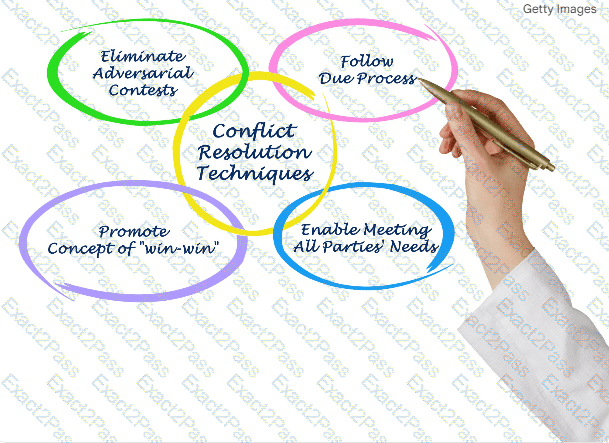
Why it produces the most lasting results:
Root Cause Focus: Unlike other methods that may only address symptoms, collaboration seeks to identify and resolve the underlying problem.
Buy-in: Because all parties participate in the solution, they are more likely to support the outcome, reducing the chance of the conflict resurfacing.
Relationship Building: It fosters trust and improves team dynamics by treating conflict as an opportunity for improvement rather than a battle to be won.
Analysis of Distractors:
A (Withdraw/avoid): This involves retreating from a conflict or postponing the issue. It is a lose-leave approach that fails to solve the problem, often allowing it to worsen over time.
B (Smooth/accommodate): This emphasizes areas of agreement rather than areas of difference, conceding one ' s position to maintain harmony. It is a temporary fix (a " band-aid " ) that does not address the core issue.
C (Compromise/reconcile): This involves searching for solutions that bring some degree of satisfaction to all parties but requires everyone to give something up. This is a lose-lose or " middle ground " approach that can lead to lingering dissatisfaction.
A project manager is reviewing some techniques that can be used to evaluate solution results. The intent is to determine if the solution provides the functionality for typical usage by a stakeholder with in-depth business knowledge.
Which evaluation technique is most effective for this situation?
Day-in-the-life testing
Exploratory testing
User acceptance testing
Integration testing
According to the PMI Guide to Business Analysis and the PMBOK® Guide, solution evaluation involves verifying that the solution meets the business need and provides the required value under real-world conditions.
Why Choice A is correct: Day-in-the-life (DITL) testing is a specific validation technique where a stakeholder with in-depth business knowledge performs their actual daily tasks using the new solution. Unlike standard functional testing, DITL testing focuses on the " typical usage " and end-to-end business processes to ensure the solution works in the context of the user ' s actual environment and workflow. It is the most effective way to determine if the functionality supports the business operations as intended.
Analysis of other options:
B (Exploratory testing): This is an unscripted testing technique used to discover unexpected behaviors or bugs. It is usually performed by testers rather than business experts focused on typical daily usage.
C (User acceptance testing): While DITL is a form of UAT, " User Acceptance Testing " is a broad category that often involves verifying the solution against specific documented requirements (test cases). DITL is more specific and effective for the " typical usage " scenario described in the question.
D (Integration testing): This is a technical testing phase where individual software modules are combined and tested as a group to ensure they communicate correctly. It does not focus on business-level " usage " by stakeholders.
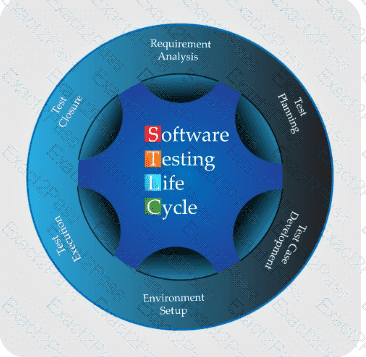
By performing Day-in-the-life testing, the project manager ensures that the solution is not just technically sound, but operationally " fit for purpose " for the people who will use it every day.
Project Stakeholder Management focuses on:
project staff assignments
project tea m acquisition
managing conflicting interests
communication methods
According to the PMBOK® Guide (Project Management Body of Knowledge), specifically within the Project Stakeholder Management knowledge area:
Managing Conflicting Interests (Option C): This is a core focus of stakeholder management. Every project has multiple stakeholders (customers, sponsors, the performing organization, and the public) who often have different and conflicting expectations or interests. The project manager must identify these stakeholders, analyze their impact and expectations, and develop strategies to engage them effectively while balancing these competing interests to ensure project success.
Project Staff Assignments (Option A): This is a specific output of the Resource Management knowledge area, specifically the Acquire Resources process. It refers to the individuals who are assigned to work on the project.
Project Team Acquisition (Option B): This is the process of confirming resource availability and obtaining the team necessary to complete project activities, which is also part of Project Resource Management.
Communication Methods (Option D): While communication is the primary tool used to manage stakeholders, " Communication Methods " is a technical component of the Project Communications Management knowledge area. Stakeholder management focuses on the relationships and the engagement of the people, whereas Communications Management focuses on the information and how it is distributed.
In the PMI framework, Project Stakeholder Management is about more than just communication; it is about the proactive identification and management of the people, groups, or organizations that could impact or be impacted by the project to ensure that conflicting interests do not derail the project objectives.
Which of the following is a tool and technique used to monitor risk?
Technical performance measurement
Cost performance baseline
Benchmarking
Cost of quality
According to the PMBOK® Guide, the Monitor Risks process involves tracking identified risks, monitoring residual risks, identifying new risks, and evaluating risk process effectiveness throughout the project.
Technical Performance Measurement: This is a specific tool and technique used in monitoring risks. It compares technical accomplishments during project execution to the schedule of technical achievement. It requires the definition of objective, quantifiable measures of technical performance (such as weight, transaction processing time, or number of delivered defects).
The " Warning Signal " : If the technical performance is not meeting the plan (e.g., a software module is taking more memory than allocated), it indicates that a risk (such as failing to meet the final technical requirements) may be occurring or is more likely to occur than previously thought.
Other Tools in Monitor Risks:
Data Analysis: Including Reserve Analysis and Trend Analysis.
Audits: To examine the effectiveness of the risk response processes.
Meetings: Specifically Risk Reviews, which should be scheduled regularly.
Analysis of Other Options:
B. Cost performance baseline: This is an Output of the Determine Budget process and serves as an Input to various monitoring and controlling processes. It is a document, not a tool or technique.
C. Benchmarking: This is a tool and technique typically used in Plan Quality Management or Plan Stakeholder Engagement. It involves comparing actual or planned project practices to those of comparable projects to identify best practices and provide a basis for measuring performance.
D. Cost of quality (COQ): This is a tool and technique used in Plan Quality Management to find the total cost of all efforts to achieve product/service quality. While it relates to risk, it is specifically a quality planning tool.
Plan Risk Management is the process of defining how to:
Communicate identified risks to the project stakeholders.
Conduct risk management activities for a project.
Analyze the impact a specific risk may have on the project.
Address unexpected risks that may occur during a project.
According to the PMBOK® Guide, Plan Risk Management is the process of defining how to conduct risk management activities for a project. It is the foundational process of the Project Risk Management Knowledge Area.
Purpose and Objective: The key benefit of this process is that it ensures that the degree, type, and visibility of risk management are proportionate to both the risks and the importance of the project to the organization and other stakeholders.
Defining the " How " : This process does not identify or analyze specific risks. Instead, it creates the Risk Management Plan, which outlines the methodology, roles and responsibilities, budgeting, and timing for risk activities. It also defines risk categories (often using a Risk Breakdown Structure) and definitions of risk probability and impact.
Stakeholder Alignment: It is critical for communicating with and obtaining agreement from stakeholders to ensure the risk management process is supported and performed effectively throughout the project life cycle.
Analysis of other choices:
Choice A (Communicate identified risks): While communication is a part of risk management, the specific process for communicating risk information to stakeholders is usually handled within Manage Communications or as part of the broader Monitor Risks process.
Choice C (Analyze the impact): This describes the Perform Qualitative Risk Analysis or Perform Quantitative Risk Analysis processes. Plan Risk Management sets the rules for how that analysis will be done, but doesn ' t perform the analysis itself.
Choice D (Address unexpected risks): Addressing risks that have occurred is part of Plan Risk Responses (for known risks) or the use of workarounds/management reserves (for unexpected " unknown-unknowns " ). Plan Risk Management only defines the framework for these actions.
What quantitative risk analysis technique is used to select the optimum course of action from a number of alternatives?
Sensitivity analysis
Simulation
Decision tree analysis
Influence diagram
According to the PMBOK® Guide, specifically the Perform Quantitative Risk Analysis process, certain mathematical tools are used to evaluate uncertainty and make informed choices when faced with multiple paths.
Decision Tree Analysis: This is a diagramming and calculation technique used to evaluate several alternate courses of action. It uses Expected Monetary Value (EMV) to calculate the average outcome when the future includes uncertain scenarios.
Optimum Course of Action: By calculating the EMV for each " branch " of the tree (multiplying the probability of an event by its financial impact), the project manager can mathematically determine which path provides the highest value or the lowest cost to the organization.
Evaluation of Alternatives: It is particularly effective for " Make-vs-Buy " scenarios or " Upgrade-vs-Replace " decisions where different paths have different costs, risks, and potential rewards.
Why other options are incorrect:
Option A: Sensitivity analysis: This tool (often visualized as a Tornado Diagram) is used to determine which individual risks have the most potential impact on project outcomes. It identifies the " most sensitive " variables but does not help in choosing between different strategic paths.
Option B: Simulation: This usually refers to Monte Carlo analysis, which uses a computer model to simulate the project many times to show the probability of completing the project on a certain date or at a certain cost. It measures overall project risk rather than selecting between specific discrete alternatives.
Option D: Influence diagram: While these are used in risk analysis, they are graphical representations of situations showing causal influences, time ordering of events, and other relationships between variables. They help in modeling risk but are not the primary tool for calculating the " optimum course of action " among alternatives in the same way a Decision Tree is.
In the Plan Procurement Management process, which source selection criteria analyzes if the seller ' s proposed technical methodologies, techniques, solutions, and services meet the procurement documents requirements?
Technical approach
Technical capability
Business size and type
Production capacity and interest
According to the PMBOK® Guide, specifically within the Plan Procurement Management process, Source Selection Criteria are developed and used to rate or score seller proposals. When an organization evaluates a vendor, they use specific criteria to ensure the selected seller can fulfill the requirements.
Technical Approach: This specific criterion focuses on the " how. " It analyzes whether the seller’s proposed methodologies, techniques, solutions, and services align with the requirements defined in the procurement documents (such as the Statement of Work). It evaluates the feasibility and effectiveness of the vendor ' s planned delivery process.
Source Selection Criteria (General): These are often included as part of the procurement documents to give sellers an understanding of how they will be evaluated. They can be objective (e.g., " The seller must have 10 years of experience " ) or subjective (e.g., " The proposed technical approach must be innovative " ).
Comparison with other options:
B. Technical capability: This refers to the seller ' s ability or expertise (e.g., does the staff have the required skills or certifications?) rather than the specific methodology proposed for the current project.
C. Business size and type: This is a non-technical criterion used to see if the seller meets specific categories, such as being a small business or a disadvantaged enterprise, as required by some government or corporate policies.
D. Production capacity and interest: This evaluates whether the seller has the available resources (manpower, equipment, or facility space) to take on the work and whether they have expressed a genuine interest in the contract.
A logical relationship in which a successor activity cannot start until a predecessor activity has finished is known as:
Start-to-start (SS).
Start-to-finish (SF).
Finish-to-start (FS).
Finish-to-finish (FF).
In accordance with the PMBOK® Guide (Project Schedule Management), specifically regarding the Precedence Diagramming Method (PDM), there are four types of logical relationships or dependencies used to sequence activities.
The Finish-to-start (FS) relationship is defined as:
Definition: A logical relationship in which a successor activity cannot start until a predecessor activity has finished.
Usage: This is the most commonly used logical relationship in project scheduling.
Example: In a construction project, the activity " Level Concrete " (Successor) cannot start until the activity " Pour Concrete " (Predecessor) has finished.
Analysis of Distractors:
A. Start-to-start (SS): A logical relationship in which a successor activity cannot start until a predecessor activity has started. (e.g., Leveling concrete cannot start until pouring concrete has started).
B. Start-to-finish (SF): A logical relationship in which a successor activity cannot finish until a predecessor activity has started. This is the rarest type of relationship used in project management.
D. Finish-to-finish (FF): A logical relationship in which a successor activity cannot finish until a predecessor activity has finished. (e.g., Writing a document must be finished before the editing of that document can be finished).
The three processes of Project Cost Management are:
Estimate Costs, Control Schedule, and Control Costs.
Estimate Costs, Determine Budget, and Estimate Activity Resources.
Determine Budget, Control Schedule, and Estimate Activity Resources.
Estimate Costs, Determine Budget, and Control Costs.
According to the PMBOK® Guide, the Project Cost Management knowledge area consists of the processes involved in planning, estimating, budgeting, financing, funding, managing, and controlling costs so that the project can be completed within the approved budget.
In the standard lifecycle (such as in PMBOK® Guide 5th and 6th Editions), there are three core processes:
Estimate Costs: The process of developing an approximation of the monetary resources needed to complete project work.
Determine Budget: The process of aggregating the estimated costs of individual activities or work packages to establish an authorized cost baseline.
Control Costs: The process of monitoring the status of the project to update the project costs and managing changes to the cost baseline.
Analysis of Other Options:
A. Estimate Costs, Control Schedule, and Control Costs: Control Schedule belongs to the Project Schedule Management knowledge area, not Cost Management.
B. Estimate Costs, Determine Budget, and Estimate Activity Resources: Estimate Activity Resources is traditionally a process within Project Schedule Management (or Project Resource Management in newer editions).
C. Determine Budget, Control Schedule, and Estimate Activity Resources: This option incorrectly includes processes from both Schedule and Resource Management.
What statement describes the function or responsibility of a project manager?
Works with the sponsor to address internal political and strategic issues that may impact the team
Seeks ways to develop relationships that assist the team in achieving organizational goals and objectives
Ensures that the project ' s business operations are efficient
Provides management oversight for a project’s functional or business units
According to the PMBOK® Guide, the project manager is the person assigned by the performing organization to lead the team that is responsible for achieving the project objectives. The role is inherently focused on integration and leadership.
Relationship Building: A key responsibility of the project manager is to act as a bridge between the project team, the organization ' s senior management, and external stakeholders. They must proactively seek and develop relationships to navigate the organizational culture, secure resources, and ensure that the project remains aligned with the broader goals and objectives of the business.
Proactive Integration: Unlike a functional manager who oversees a specific department, the project manager integrates various components of the project. This requires significant interpersonal skills to influence those who do not report directly to them.
Analysis of other options:
Option A: This describes the primary function of the Project Sponsor. While the project manager supports the sponsor, it is the sponsor ' s responsibility to handle high-level internal politics and strategic " roadblocks " at the executive level.
Option C: This describes the role of Operations Management. Operations managers focus on the ongoing, repetitive business functions (efficiency), whereas project managers focus on temporary endeavors (change).
Option D: This describes a Functional Manager. Functional managers have management oversight over a specific business unit (e.g., HR, IT, Finance) rather than the cross-functional project effort.
Per PMI standards, the project manager’s value is measured by their ability to lead the team and manage the project ' s constraints through effective communication and relationship management.
Which tasks should a project manager accomplish in order to manage project scope correctly?
Define. Validate, and Control Scope. Control Schedule; Control Costs and Manage Stakeholder Engagement
Collect Requirements. Define Scope. Create WBS. Develop Schedule, and Manage Stakeholder Engagement
Plan Scope Management; Collect Requirements; Define. Validate, and Control Scope; and Create WBS
Define. Validate, and Control Scope. Control Costs. Manage Stakeholder Engagement, and keep budget under control
According to the PMBOK® Guide, Project Scope Management includes the processes required to ensure that the project includes all the work required, and only the work required, to complete the project successfully. To manage scope correctly, a project manager must follow the specific sequence of processes defined within the Scope Management Knowledge Area.
The six core processes are:
Plan Scope Management: Creating a scope management plan that documents how the project and product scope will be defined, validated, and controlled.
Collect Requirements: Determining, documenting, and managing stakeholder needs and requirements to meet project objectives.
Define Scope: Developing a detailed description of the project and product.
Create WBS: Subdividing project deliverables and project work into smaller, more manageable components.
Validate Scope: Formalizing acceptance of the completed project deliverables.
Control Scope: Monitoring the status of the project and product scope and managing changes to the scope baseline.
Analysis of Other Options:
A. Control Schedule; Control Costs: These belong to the Schedule Management and Cost Management Knowledge Areas, respectively. While related to overall project health, they are not tasks used to manage scope specifically.
B. Develop Schedule: This is a Schedule Management process. Managing scope is the precursor to developing a schedule, but the schedule itself is not a scope management task.
D. Control Costs; Manage Stakeholder Engagement: These are processes from other Knowledge Areas. " Keeping budget under control " is a goal of Cost Management, not a defined process for managing Scope.
The creation of an internet site to engage stakeholders on a project is an example of which type of communication?
Push
Pull
Interactive
Iterative
According to the PMBOK® Guide, specifically within the Plan Communications Management and Manage Communications processes, there are three primary methods used to share information among stakeholders. These are classified based on how the information is sent and received:
Pull Communication: This method is used for very large volumes of information or for very large audiences. It requires the recipients to access the communication content at their own discretion.
Examples: Intranet sites, e-learning, knowledge repositories, and internet sites or project websites.
Mechanism: The information is " posted " to a central location, and the stakeholder must " pull " the information by navigating to the site to read or download it.
Push Communication: This is sent to specific recipients who need to receive the information. This ensures that the information is distributed but does not certify that it actually reached or was understood by the intended audience.
Examples: Letters, memos, reports, emails, faxes, and press releases.
Interactive Communication: This occurs between two or more parties performing a multi-directional exchange of information. It is the most efficient way to ensure a common understanding among all participants on specific topics.
Examples: Meetings, phone calls, instant messaging, and video conferencing.
Comparison with other options:
A. Push: An internet site is not " pushed " to a user; the user must proactively visit the URL to engage with the content. If the project manager sent an email with the site ' s updates, that specific email would be Push, but the site itself is a Pull source.
C. Interactive: While a website can have interactive elements (like a comment section), the fundamental classification for a broadcasted repository of information like an internet site is " Pull. " Interactive communication requires real-time or near real-time back-and-forth exchange.
D. Iterative: This is not a communication method defined in the PMBOK® Guide. Iterative refers to a project life cycle or a process of repeated cycles (as seen in Agile or progressive elaboration), but it does not describe how information is transmitted between stakeholders.
Which of the following events would result in a baseline update?
A project is behind schedule and the project manager wants the baseline to reflect estimated actual completion.
A customer has approved a change request broadening the project scope and increasing the budget.
One of the risks identified in the risk management plan occurs, resulting in a schedule delay.
One of the key project team resources has left the team and no replacement is available.
According to the PMBOK® Guide, a Baseline (Scope, Schedule, or Cost) is the approved version of a project plan. It can only be changed through formal Change Control procedures and is used as a basis for comparison to actual results.
Approved Change Requests: When a change request is formally approved through the Perform Integrated Change Control process, and that change affects the project ' s scope, schedule, or cost, the corresponding baselines must be updated. This ensures that the " yardstick " used to measure performance reflects the new, agreed-upon reality of the project.
The Baseline ' s Purpose: The baseline exists to track variances. If you changed the baseline every time a project was late or a risk occurred (Options A, C, and D), you would lose the ability to measure how far the project has drifted from the original plan.
Analysis of Other Options:
A. A project is behind schedule...: This is often referred to as " re-baselining to hide delays. " Baselines should not be updated simply because performance is poor; the baseline must remain to show the extent of the delay.
C. A risk occurs, resulting in a delay: When a risk occurs, it is handled using contingency reserves or workarounds. While it impacts the actual data, it does not automatically change the baseline unless a formal change request is approved to modify the project ' s end date.
D. Resource leaves with no replacement: This is a project constraint or issue. While it will likely cause a variance in the schedule and cost, the baseline remains the same so the project manager can report the negative impact of that resource loss against the original plan.
During a retrospective, the team finds that all of the user stories are not complete. What should be done with the incomplete user stories?
Move these user stories back to the product backlog for reprioritization.
Remove these user stories as they are not important.
Advance these user stories to the top of the next sprint backlog.
Complete these user stories in the current sprint and extend the sprint length.
In Agile and Scrum frameworks, specifically during the Sprint Review and Sprint Retrospective, any work that does not meet the " Definition of Done " (DoD) cannot be considered complete or demonstrated to the customer.
Why Choice A is correct:
Maintaining the Backlog: According to the Scrum Guide, incomplete user stories are returned to the Product Backlog. They do not " automatically " move to the next sprint.
Reprioritization: The Product Owner must re-evaluate these stories. Business priorities may have shifted, or new information discovered during the sprint might make an incomplete story less valuable than other items currently sitting in the backlog.
Transparency: Moving them back ensures that the team’s velocity is calculated accurately (only counting completed points) and that the Product Owner maintains control over the project ' s direction.
Analysis of other options:
B (Remove these user stories): Just because a story wasn ' t finished in one sprint doesn ' t mean it lacks value. Removing them without a business justification violates the goal of delivering maximum value to the customer.
C (Advance to the top of the next sprint): This is a common mistake in practice, but it is technically incorrect according to Agile principles. The Product Owner, not a default rule, decides the priority of the next sprint. Forcing them to the top bypasses the Sprint Planning process.
D (Extend the sprint length): One of the core tenets of Scrum is the Timebox. Sprints have a fixed duration to create a predictable rhythm (cadence). Extending a sprint to finish work breaks this cadence and hides the team ' s true capacity/velocity issues.
Key Concept: The Project Management Institute (PMI) and the Agile Practice Guide emphasize that Incomplete Work (Choice A) should always be re-estimated and re-prioritized. This prevents " technical debt " from being hidden and ensures that the team is always working on the highest-priority items as defined by the most current business needs.
Which action should a project manager take to ensure that the project management plan is effective and current?
Conduct periodic project performance reviews.
Identify quality project standards.
Follow ISO 9000 quality standards.
Complete the quality control checklist.
According to the PMBOK® Guide, specifically within the Monitor and Control Project Work process, the project manager is responsible for tracking, reviewing, and reporting the overall progress to meet the performance objectives defined in the project management plan.
Performance Reviews: These reviews compare actual performance against the performance measurement baseline (scope, schedule, and cost baselines). By conducting these periodically, the project manager can determine if the project is " on track " or if variances exist that require corrective or preventive actions.
Keeping the Plan Current: The project management plan is a " living document. " When performance reviews identify significant deviations, the project manager initiates Change Requests through the Perform Integrated Change Control process. Once approved, these changes are incorporated into the plan, ensuring it remains a realistic and effective guide for the remainder of the project.
Continuous Improvement: Periodic reviews allow the team to analyze trends (Trend Analysis) and forecast future performance (Variance Analysis), which are essential for proactive management and keeping the plan aligned with the project ' s evolving environment.
Comparison with other options:
B. Identify quality project standards: This is a specific activity within the Plan Quality Management process. While important for quality, it does not address the broader effectiveness or " currency " of the entire integrated project management plan.
C. Follow ISO 9000 quality standards: ISO 9000 is an external international standard for quality management systems. While an organization might adopt these, " following " them is a general compliance activity rather than a specific project management mechanism for updating and maintaining a project-specific plan.
D. Complete the quality control checklist: This is a tool used in the Control Quality process to verify that a set of required steps has been performed. It is a tactical task used for deliverables, not a strategic tool for ensuring the project management plan is effective and current.
Which of the following correctly explains the term " progressive elaboration ' ?
Changing project specifications continuously
Elaborate tracking of the project progress
Elaborate tracking of the project specifications with a change control system
Project specifications becoming more explicit and detailed as the project progresses
According to the PMBOK® Guide, Progressive Elaboration is a fundamental characteristic of projects that integrates the concepts of temporary and unique.
Definition: It is the process of continuously improving and detailing a plan as more detailed information and more accurate estimates become available. It allows a project management team to define work and manage it to a greater level of detail as the project evolves.
Mechanism: In the early stages of a project, the project scope is defined broadly. As the project team better understands the objectives and the deliverables, the specific requirements and work packages are " elaborated " or broken down further. This is most commonly seen in the development of the WBS and Rolling Wave Planning.
Distinction from Scope Creep: It is important to distinguish progressive elaboration from " Scope Creep " (Option A). Progressive Elaboration is a planned, systematic refinement of the existing scope, whereas Scope Creep is the uncontrolled expansion of project scope without adjustments to time, cost, and resources.
Analysis of Other Options:
A. Changing project specifications continuously: This describes " Scope Creep " or lack of change control, which is a negative project state.
B. Elaborate tracking of the project progress: This refers to " Monitoring and Controlling " activities, such as using Earned Value Management, but is not progressive elaboration.
C. Elaborate tracking of the project specifications with a change control system: This describes " Configuration Management " or " Change Control, " which manages changes to the baseline rather than the natural refinement of project details.
In the Develop Project Team process, which of the following is identified as a critical factor for a project ' s success?
Team meetings
Subcontracting teams
Virtual teams
Teamwork
According to the PMBOK® Guide, specifically within the Develop Team process of the Project Resource Management knowledge area, teamwork is identified as a critical factor for project success.
Core Objective: The primary goal of the Develop Team process is to improve interpersonal skills, team environment, and overall team performance. The guide explicitly states that project success is heavily dependent on the ability of the project team to work together effectively.
Key Success Factors:
Teamwork is the fundamental glue that allows individuals to operate as a cohesive unit to achieve project objectives.
Effective teamwork reduces communication barriers, increases synergy, and allows for better problem-solving.
It involves building trust, managing conflicts in a constructive manner, and fostering a collaborative culture.
Process Outcomes: Successful development of teamwork leads to improved individual and team competencies, which in turn leads to enhanced project performance and the likelihood of meeting project goals.
Comparison with Other Options:
Team meetings (A): These are tools or communication vehicles, but not a " critical factor for success " in themselves; the quality of interaction (teamwork) within them is what matters.
Subcontracting teams (B): This is a procurement or staffing strategy, not a success factor for internal team development.
Virtual teams (C): This is a specific team structure or technique (using technology to bridge geographical gaps), but the PMBOK® Guide notes that virtual teams often face more challenges in achieving the teamwork required for success.
When the business objectives of an organization change, project goals need to be:
realigned.
performed.
improved.
controlled.
According to the PMBOK® Guide and The Standard for Portfolio Management, projects exist to deliver value and achieve the strategic goals of an organization.
Strategic Alignment: A fundamental principle of project management is that projects are the primary vehicle for executing an organization ' s strategy. When the executive leadership shifts the business objectives (due to market changes, financial shifts, or new regulations), the ongoing and planned projects must be evaluated.
The Realignment Process: This involves reviewing the Project Charter and the Business Case to ensure they still support the updated organizational strategy. If a project no longer contributes to the new objectives, it may be changed, rescoped, or even terminated.
Portfolio Management Role: High-level alignment is typically managed at the portfolio level, where the " mix " of projects is adjusted to ensure the highest return on investment relative to the current strategic direction.
Comparison with other options:
B. Performed: Simply continuing to " perform " or execute a project that is no longer aligned with business goals is a waste of organizational resources (sunk cost fallacy).
C. Improved: While quality improvement is always a goal, " improving " a project ' s performance does not solve the fundamental issue of the project no longer serving the organization ' s revised strategic purpose.
D. Controlled: " Controlled " refers to the Monitoring and Controlling Process Group, which ensures the project stays on its current baseline. However, if the business objectives change, the baseline itself must be questioned and realigned before it can be controlled.
A risk that arises as a direct result of implementing a risk response is called a:
contingent risk
residual risk
potential risk
secondary risk
According to the PMBOK® Guide (Project Management Body of Knowledge), specifically within the Project Risk Management knowledge area and the Plan Risk Responses process, risks are categorized based on their relationship to the response strategies:
Secondary Risk (Option D): This is defined by PMI as a risk that arises as a direct result of implementing a risk response. For example, if a project team decides to mitigate the risk of a schedule delay by hiring an outside contractor, a " secondary risk " might emerge regarding the contractor ' s lack of familiarity with internal company standards. These risks must be identified and planned for just like primary risks.
Residual Risk (Option B): This is a risk that is expected to remain after the planned risk response has been implemented. It is the " leftover " risk that the project team decides to accept because it falls within acceptable risk thresholds.
Contingent Risk (Option A): This refers to a " Contingency Response Strategy, " which is a risk response that is executed only if certain predefined trigger conditions occur (also known as " fallback plans " ).
Potential Risk (Option C): This is a general term for any identified risk that has not yet occurred; it is not a technical classification within the PMI risk response framework.
In the PMI framework, the Plan Risk Responses process is iterative. When a response is chosen, the project manager must evaluate whether that response introduces new secondary risks or leaves behind residual risks that require further monitoring or a contingency reserve.
An output of the Validate Scope process is:
A requirements traceability matrix.
The scope management plan.
Work performance reports.
Change requests.
According to the PMBOK® Guide and the Standard for Project Management, the Validate Scope process is the process of formalizing acceptance of the completed project deliverables. It belongs to the Monitoring and Controlling Process Group.
While the primary goal of this process is to obtain Accepted Deliverables, it frequently results in Change Requests. According to PMI standards, if deliverables are inspected and do not meet the acceptance criteria established in the scope documentation, change requests are created for defect repair or enhancement. These requests are then processed through the Perform Integrated Change Control process.
The outputs of Validate Scope include:
Accepted Deliverables: Deliverables that meet acceptance criteria and are formally signed off by the customer or sponsor.
Change Requests: Requests for modifications or repairs to deliverables that were not accepted.
Work Performance Information: Includes data on which deliverables have been started, their progress, or which have been finished and accepted.
Project Documents Updates: Updates to documents such as the Requirements Traceability Matrix or Lessons Learned Register.
The other options are incorrect based on their classification in the PMI framework:
A requirements traceability matrix: This is an input to the Validate Scope process, used to compare requirements against the actual results. It is an output of the Collect Requirements process.
The scope management plan: This is an input to Validate Scope, as it contains the procedures for formalizing acceptance. It is an output of the Plan Scope Management process.
Work performance reports: These are outputs of the Monitor and Control Project Work process and serve as inputs to several other processes; they are not generated by Validate Scope.
As per the PMI Lexicon of Project Management Terms, the Validate Scope process is primarily concerned with the acceptance of the deliverables, whereas Quality Control is concerned with the correctness of the deliverables.
A project manager was assigned to a project with high uncertainty. What is the recommended method to calculate the project budget?
Detailed estimation
Lightweight estimation
Parametric estimation
A mix of them
According to the PMBOK® Guide and the Agile Practice Guide, projects characterized by high uncertainty (such as those using adaptive, agile, or hybrid lifecycles) require a different approach to budgeting and estimation than traditional, predictive projects.
Lightweight Estimation: In high-uncertainty environments, detailed, long-term estimates are often inaccurate because requirements change frequently. Instead, teams use lightweight estimation methods. This involves high-level forecasts based on macro-level data, such as " T-shirt sizing " (Small, Medium, Large) or story points.
Just-in-Time Planning: Rather than spending significant time upfront on a detailed budget that will likely become obsolete, lightweight estimation allows for quick, iterative updates as more information becomes available. This is often referred to as " progressive elaboration. "
Flow and Velocity: Budgets in these environments are often based on the team ' s historical velocity or the cost per iteration, providing a flexible framework that can adapt to the " unknowns " of the project.
Why other options are incorrect:
Option A: Detailed estimation: This is also known as " bottom-up " estimating. While highly accurate for projects with stable, well-defined scopes, it is extremely inefficient and prone to error in high-uncertainty projects where the scope is constantly evolving.
Option C: Parametric estimation: This uses a mathematical model based on historical data and project parameters (e.g., cost per square foot). While useful for repetitive work, it lacks the flexibility needed to handle the unique uncertainties and " emergent " requirements of complex, adaptive projects.
Option D: A mix of them: While hybrid projects do exist, the specific recommendation for the " high uncertainty " component is to move away from rigid, heavy processes toward lightweight methods to maintain agility and avoid wasted planning effort.
Which is a method of prototyping that creates a functioning representation of the final finished product to the user?
Low-fidelity prototyping
High-fidelity prototyping
Data prototyping
Report prototyping
According to the PMI Guide to Business Analysis and the PMBOK® Guide, prototyping is a method of obtaining early feedback on requirements by providing a working model of the expected product before actually building it.
High-Fidelity Prototyping: This method creates a version of the product that looks and functions as closely as possible to the final finished product. It includes functional elements, realistic navigation, and polished UI/UX designs. The goal is to allow the user to interact with the system in a way that mimics real-world use, providing the most accurate feedback possible.
User Validation: Because it is a " functioning representation, " high-fidelity prototypes are excellent for usability testing. They help stakeholders confirm that the solution will meet their needs and intentions before the organization commits to full-scale development costs.
Risk Reduction: While more expensive and time-consuming to create than low-fidelity versions, high-fidelity prototypes significantly reduce the risk of a " mismatch " between stakeholder expectations and the final deliverable.
Analysis of other options:
Option A: Low-fidelity prototyping involves simple sketches, storyboards, or paper mockups (like wireframes). While they represent the concept, they are not " functioning representations " and do not look like the finished product.
Option C: Data prototyping (or data modeling) focuses on the structure, relationships, and flow of data within a system. It is a back-end technical activity and does not provide a functioning representation of the finished product for the end-user.
Option D: Report prototyping specifically focuses on the layout and data visualization of output reports. It is a subset of prototyping but does not represent the entire " finished product. "
Per PMI standards, when the objective is to provide users with a functioning, realistic model of the end result, High-fidelity prototyping is the appropriate technique to employ.
Considering a highly dynamic project environment, which approach should the project manager adopt to manage the project team?
A self-organizing approach to increase team focus and maximize collaboration
A virtual team to minimize feeling of isolation and gaps on sharing knowledge
A distributed team to improve tracking progress, productivity, and performance
A norming approach that requires team members to adjust their behavior and work together
According to the PMBOK® Guide and the Agile Practice Guide, managing a team in a highly dynamic environment (often characterized by high uncertainty, rapid change, and complexity) requires a shift from traditional command-and-control management to more flexible, adaptive leadership styles.
Self-Organizing Teams: In dynamic or agile environments, the project manager fosters a self-organizing approach. This means the team—not the project manager—decides who does what and how the work is performed.
Focus and Collaboration: Self-organization empowers team members to respond to changes immediately without waiting for top-down instructions. This maximizes collaboration, as the team works together to solve problems in real-time, and increases focus because the individuals closest to the work are making the tactical decisions.
Role of the Project Manager: In this context, the project manager acts as a Servant Leader, removing impediments and ensuring the team has the resources and environment they need to succeed.
Why other options are incorrect:
Option B: While virtual teams are common, the option claims they " minimize feelings of isolation. " In reality, virtual teams often increase feelings of isolation and make knowledge sharing more difficult. Managing a virtual team requires specific strategies to overcome these inherent challenges.
Option C: Distributed teams (teams in different locations/time zones) typically make " tracking progress, productivity, and performance " more complex, not easier. Co-located teams are generally preferred in dynamic environments to facilitate high-bandwidth communication.
Option D: Norming is a stage in the Tuckman Ladder of team development (Forming, Storming, Norming, Performing). It is a phase of development, not a comprehensive " approach " to managing a team in a dynamic environment. While teams need to reach the norming and performing stages, the overarching approach to handle dynamism is self-organization.
Which type of chart is a graphic representation of a process showing the relationships among process steps?
Control
Bar
Flow
Pareto
In alignment with the PMBOK® Guide and PMI’s standards for Quality Management, a Flowchart (also referred to as process mapping) is the primary graphical tool used to display the sequence of steps and the branching possibilities that exist within a process.
Definition: A flowchart shows the activities, decision points, branching loops, parallel paths, and the overall order of processing by mapping an operational procedure from start to finish.
Application in Project Management:
Plan Quality Management: Used to identify where quality issues might occur or where to incorporate quality checks.
Manage Quality: Helps the team understand and estimate the " Cost of Quality " for a process by analyzing the steps involved.
Process Improvement: Provides a baseline to identify bottlenecks or redundant steps that do not add value to the project.
Comparison with Other Options:
Control Charts (A): Used to determine if a process is stable or has predictable performance over time.
Bar Charts (B): (e.g., Gantt charts) are primarily used for scheduling and showing the duration of activities.
Pareto Diagrams (D): Histograms used to identify the " vital few " sources of problems (the 80/20 rule).
Analytical techniques are a tool and technique of which process in Project Procurement Management?
Plan Procurement Management
Control Procurements
Conduct Procurements
Close Procurements
According to the PMBOK® Guide, specifically within the Project Procurement Management knowledge area, Analytical Techniques are a primary tool and technique used during the Plan Procurement Management process.
Purpose of Analytical Techniques: In this process, analytical techniques are used to help the project manager and the team determine the best strategy for acquiring goods and services. The most critical application is the Make-or-Buy Analysis.
Make-or-Buy Analysis: This technique determines whether a particular work can best be accomplished by the project team or should be purchased from outside sources. It considers both direct and indirect costs. For example, a " buy " decision might be influenced by a lack of in-house expertise, while a " make " decision might be driven by the need to keep proprietary information confidential.
Other Applications: Analytical techniques may also include evaluating various contract types (e.g., Fixed Price vs. Cost Reimbursable) and assessing the financial health or past performance of potential sellers to mitigate procurement risks.
Comparison with other options:
B. Control Procurements: The tools for this process focus on managing procurement relationships and monitoring contract performance, using tools like Claims Administration and Data Analysis (specifically Performance Reviews).
C. Conduct Procurements: This process focuses on obtaining seller responses, selecting a seller, and awarding a contract. Its primary tools include Bidder Conferences, Proposal Evaluation Techniques, and Advertising.
D. Close Procurements: In the current PMI standards (specifically the PMBOK® Guide 6th Edition and beyond), the activities for closing procurements have been integrated into Control Procurements and Close Project or Phase. The tools used for final administrative closure focus on Procurement Audits and Negotiated Settlements.
The project manager is leading a construction project that has been ongoing for eight years. The project manager needs to calculate the correct static payback period and consults the cash flow statement of the construction project investment.
What equation should the project manager use?
Static payback period = 6 + 1300 / 500 = 6.6
Static payback period = 3 + 1200 / 500 = 5.4
Static payback period = 5 + 700 / 500 = 5.4
Static payback period = 5 + 200 / 500 = 5.4
The Static Payback Period is the time required to recover the cost of an investment without considering the time value of money (unlike the Discounted Payback Period). In long-term construction projects, this is often calculated using a cumulative cash flow table.
The general formula for a payback period when annual cash inflows are uneven is:
Payback Period=A+CB
Where:
A is the last period with a negative cumulative cash flow.
B is the absolute value of cumulative cash flow at the end of period A.
C is the total cash flow during the period immediately following A.
In standardized project management exam questions of this type, you are looking for the equation where the math actually balances to the provided result. Let ' s look at the options:
A: 6+(1300/500)=6+2.6=8.6 (The result 6.6 is mathematically incorrect).
B: 3+(1200/500)=3+2.4=5.4 (While the result is 5.4, this implies the project broke even almost immediately after year 3 despite being an 8-year project).
C: 5+(700/500)=5+1.4=6.4 (The result 5.4 is mathematically incorrect).
D: 5+(200/500)=5+0.4=5.4 (This is mathematically sound: 200/500=0.4. Adding that to year 5 gives exactly 5.4).
In a construction project lasting eight years, a payback period of 5.4 years suggests:
By the end of Year 5, the project still had 200 units of " debt " (unrecovered investment).
In Year 6, the project generated 500 units of cash flow.
The project reached the " break-even " point 40% (0.4) of the way through Year 6.
The Project Management Institute (PMI) highlights that while the Payback Period is a simple and intuitive way to measure risk (shorter is better), it ignores any cash flows that occur after the payback point. For an 8-year project, the project manager must also consider the Internal Rate of Return (IRR) or Net Present Value (NPV) to understand the project ' s true long-term profitability beyond the initial 5.4 years.
Which process involves the creation of a document that provides the project manager with the authority to apply resources to a project?
Define Activities
Direct and Manage Project Work
Develop Project Management Plan
Develop Project Charter
According to the PMBOK® Guide, the Develop Project Charter process is the process of developing a document that formally authorizes the existence of a project and provides the project manager with the authority to apply organizational resources to project activities.
Authority and Empowerment: Without a signed Project Charter, a project manager may exist in name, but they do not have the formal power to utilize company funds, staff, or equipment. The charter establishes a partnership between the performing and requesting organizations.
The Project Sponsor: The charter is typically issued by a project initiator or sponsor who is at a level appropriate to procure funding and commit resources to the project.
Key Benefits: The key benefits of this process are that it provides a direct link between the project and the strategic objectives of the organization, creates a formal record of the project, and shows the organizational commitment to the project.
Comparison with other options:
A. Define Activities: This is a planning process in Schedule Management that identifies the specific actions to be performed to produce project deliverables. It assumes the project is already authorized.
B. Direct and Manage Project Work: This is an execution process. It is the act of using the authority and resources provided by the charter to perform the work, but it is not the process that grants that authority.
C. Develop Project Management Plan: This process defines, prepares, and coordinates all plan components. While it guides how resources are managed, the fundamental authority to even begin this planning process comes from the Project Charter.
Which can be used to convert a verified deliverable to an accepted deliverable?
Decomposition
Reporting
Voting
Brainstorming
According to the PMBOK® Guide, the transition from a Verified Deliverable to an Accepted Deliverable occurs during the Validate Scope process. To formalize this acceptance, the project manager and relevant stakeholders must make a decision regarding the deliverables.
Voting (Choice C): This is a specific Tool and Technique used under the " Decision Making " category in the Validate Scope process. When the customer or project sponsor reviews the deliverables, they may use voting (such as unanimity, majority, or plurality) to reach a conclusion on whether the deliverable meets the acceptance criteria. This collective decision-making process is what officially converts the verified (internally checked) status to accepted (externally signed-off).
Decomposition (Choice A): This is a technique used in Create WBS and Define Activities. It involves breaking down project scope and deliverables into smaller, more manageable components. It does not relate to the formal acceptance of a finished product.
Reporting (Choice B): While work performance reports are used to communicate status, the act of reporting itself does not grant formal acceptance of a deliverable.
Brainstorming (Choice D): This is a data-gathering technique typically used during the planning phases (like Identify Risks or Collect Requirements) to generate ideas. It is not the formal mechanism used by a client to accept a completed deliverable.
In summary, Control Quality produces Verified Deliverables by ensuring they are correct. These are then brought into Validate Scope, where decision-making techniques like Voting are used to obtain the formal sign-off that produces Accepted Deliverables.
The degree of uncertainty an entity is willing to take on in anticipation of a reward is known as its risk:
management
response
tolerance
appetite
According to the PMBOK® Guide (Project Management Body of Knowledge), specifically within the Project Risk Management knowledge area, it is critical to distinguish between the various terms related to an organization ' s attitude toward risk:
Risk Appetite (Option D): This is defined as the degree of uncertainty an entity is willing to take on in anticipation of a reward. It reflects the organization ' s management philosophy and influences the culture and style of the organization. Essentially, it answers the question: " How much risk are we willing to hunt for or accept to achieve our goals? "
Risk Tolerance (Option C): While often confused with appetite, risk tolerance is the specified amount of risk that an organization or individual is willing to settle for. It is often more measurable and acts as a " buffer " around an objective. (Note: In newer PMI standards, " Tolerance " is frequently replaced by " Risk Thresholds " ).
Risk Response (Option B): This refers to the specific actions or strategies (such as Avoid, Transfer, Mitigate, or Accept) that the project team decides to implement to address identified risks. It is an action, not an attitude or degree of uncertainty.
Risk Management (Option A): This is the entire Knowledge Area and the systematic process of identifying, analyzing, and responding to project risk. It is the framework, not the specific measure of willingness to take risks.
In the PMI framework, understanding Risk Appetite is a prerequisite for the Plan Risk Management process, as it helps the project manager determine the stringency and type of risk management activities that will be appropriate for the performing organization.
An example of a group decision-making technique is:
nominal group technique
majority
affinity diagram
multi-criteria decision analysis
According to the PMBOK® Guide (Project Management Body of Knowledge), specifically within the Collect Requirements and Develop Schedule processes, PMI distinguishes between Group Decision-Making Techniques and Data Representation/Data Gathering tools.
Majority (Option B): This is a specific Group Decision-Making Technique. PMI defines these techniques as assessment processes having multiple alternatives with an expected outcome in the form of future actions. Majority is a decision reached with support from more than 50% of the members of the group. Other techniques in this specific category include Unanimity (everyone agrees), Plurality (the largest block decides even if not a majority), and Autocracy (one individual decides for the group).
Nominal Group Technique (Option A): While often used in group settings, PMI classifies this as a Data Gathering technique. It enhances brainstorming with a voting process used to rank the most useful ideas for further brainstorming or for prioritization.
Affinity Diagram (Option C): This is a Data Representation technique. it allows large numbers of ideas to be classified into groups for review and analysis. It is a way to organize data, not a rule for making a final decision.
Multi-criteria Decision Analysis (Option D): This is a Data Analysis technique. It uses a decision matrix to provide a systematic analytical approach for establishing criteria, such as risk levels, uncertainty, and valuation, to evaluate and rank many ideas.
In the PMI framework, the Majority rule is one of the four primary methods used by a group to reach a conclusion when evaluating requirements or project alternatives.
A project team of telecommuters located in three different time zones regularly misses project deadlines Daily meetings often start and end with the same person talking and the rest of the team listening The project manager determines that communication among team members must be addressed.
What communication step is missing from the daily meetings?
Interpersonal communication
Feedback response communication
Push communication
Pull communication
According to the PMBOK® Guide, specifically within the Project Communications Management knowledge area, effective communication requires a " closed-loop " system to ensure that information is not only sent but also received and understood.
The Feedback Loop: In the scenario described, the communication is " one-way " —one person talks while others listen. This lacks the Feedback component of the Interactive Communication Model. Feedback is the response from the receiver that confirms they have decoded and understood the message.
Addressing Missed Deadlines: When a team is missing deadlines, it often indicates a lack of alignment or misunderstanding of tasks. Without a feedback response, the project manager and the speaker have no way to verify if the instructions were clear or if the team members have the information they need to succeed.
Interactive Communication: Daily meetings (such as Daily Stand-ups in Agile or coordination meetings in Waterfall) are intended to be Interactive Communication. This requires a multi-directional flow of information where participants provide status updates, raise blockers, and confirm their understanding of the day ' s goals.
Why other options are incorrect:
Option A: Interpersonal communication: This is a broad category of communication (face-to-face or virtual interaction). While the team is engaging in interpersonal communication, the specific step missing from their process to ensure effectiveness is the feedback loop.
Option C: Push communication: The scenario actually describes an over-reliance on push communication (sending information to recipients without expecting an immediate response). Adding more push communication would not solve the problem of team members simply listening and not engaging.
Option D: Pull communication: This is used for very large volumes of information or large audiences where recipients access content at their own discretion (e.g., an intranet or a shared drive). It is not appropriate for a daily meeting where immediate synchronization is required.
Which is an example of leveraging evolving trends and emerging practices in Project Integration Management?
Hybrid methodologies
Risk register updates
Outsourced project resources
Reliance on lessons learned documents
According to the PMBOK® Guide, Project Integration Management is evolving to accommodate new ways of working. The guide explicitly identifies several Trends and Emerging Practices in this knowledge area:
Use of Automated Tools: Using Project Management Information Systems (PMIS) to collect, analyze, and use data.
Visual Management Tools: Using visual elements (like Kanban boards) to capture and see the project elements rather than just documented text.
Project Knowledge Management: A focus on the " human " side of knowledge—ensuring that the team and stakeholders share and create knowledge throughout the project.
Hybrid Methodologies: This is the practice of combining different development approaches (e.g., Predictive/Waterfall for parts of the project that are well-understood and Adaptive/Agile for parts that are complex or evolving). Organizations are increasingly leveraging hybrid models to balance the need for control with the need for flexibility.
Expanding the Project Manager’s Responsibilities: Moving beyond just task management to include strategic and business management.
Analysis of Other Options:
B. Risk register updates: This is a standard project management activity that has been a core part of the Project Risk Management knowledge area for decades. It is not considered an " emerging practice. "
C. Outsourced project resources: Outsourcing is a standard practice within Project Procurement Management. While the methods of managing remote or distributed teams are evolving, outsourcing itself is a traditional business model.
D. Reliance on lessons learned documents: While lessons learned are vital, the traditional reliance on static " documents " is actually what emerging practices (like Project Knowledge Management) are trying to move away from, favoring instead more interactive and continuous knowledge-sharing environments.
The scope management plan is a subsidiary of which project document?
Schedule management plan
Project management plan
Quality management plan
Resource management plan
According to the PMBOK® Guide, specifically within the Plan Scope Management process, the resulting Scope Management Plan is defined as a component or " subsidiary plan " of the overarching Project Management Plan.
Integration: The Project Management Plan is the primary document that defines how the project is executed, monitored, controlled, and closed. It is composed of several subsidiary plans (Scope, Schedule, Cost, Quality, Resource, Communications, Risk, Procurement, and Stakeholder Engagement) and baselines.
The Scope Management Plan ' s Role: This specific subsidiary plan describes how the project scope will be defined, developed, monitored, controlled, and validated. It provides the guidance necessary to manage the project ' s boundaries throughout the lifecycle.
Hierarchical Relationship: In PMI methodology, you do not have " plans within plans " of equal standing (e.g., a Scope plan is not inside a Schedule plan). Instead, all specialized management plans feed upward into the Project Management Plan, which acts as the central integration point for all project data and processes.
Comparison with other options:
A. Schedule management plan: While closely related in the planning phase, the Schedule Management Plan is a peer to the Scope Management Plan, not its parent. Both are separate subsidiaries of the Project Management Plan.
C. Quality management plan: This is another peer subsidiary plan. It focuses on the standards and metrics for the project, whereas scope focuses on the work required.
D. Resource management plan: This plan manages physical and team resources. While resources are needed to complete the scope, the documentation for managing them is distinct and resides independently as a subsidiary of the Project Management Plan.
A project manager Is addressing risks and potential concerns related to stakeholder management, and Is clarifying and resolving previously Identified issues. In which process is the project manager engaged?
Identify Stakeholders
Plan Stakeholder Engagement
Manage Stakeholder Engagement
Monitor Slakeholder Engagement
According to the PMBOK® Guide (6th Edition), the Manage Stakeholder Engagement process is the process of communicating and working with stakeholders to meet their needs and expectations, address issues, and foster appropriate stakeholder engagement involvement.
This process is part of the Executing Process Group. It is the stage where the project manager actually interacts with the stakeholders. Key activities include:
Engaging stakeholders at appropriate project stages to obtain, confirm, or maintain their continued commitment to the success of the project.
Managing stakeholder expectations through negotiation and communication.
Addressing any risks or potential concerns related to stakeholder management and anticipating future issues that may be raised by stakeholders.
Clarifying and resolving issues that have been identified.
Analysis of Distractors:
A (Identify Stakeholders): This is an Initiating process focused on creating the Stakeholder Register by identifying who is impacted by the project. It does not involve resolving active project issues.
B (Plan Stakeholder Engagement): This is a Planning process where the project manager develops the strategy for engagement. It results in the Stakeholder Engagement Plan (the " how-to " document), but it does not involve the actual " doing " or resolving of current issues.
D (Monitor Stakeholder Engagement): This is a Monitoring and Controlling process. It involves monitoring project stakeholder relationships and tailoring strategies for engaging stakeholders. While it might identify that an engagement strategy is failing, the actual work of " addressing concerns " and " resolving issues " is a function of the Manage (Execution) process.
Key Document Reference: The Issue Log is a primary input and update for this process. According to Section 13.3 of the PMBOK® Guide, " Manage Stakeholder Engagement " is specifically where the project manager uses communication skills to ensure that concerns are addressed before they become major issues.
Scope, schedule, and cost parameters are integrated in the:
Performance measurement baseline.
Analysis of project forecasts,
Summary of changes approved in a period,
Analysis of past performance.
According to the PMBOK® Guide, specifically within the Monitor and Control Project Work and Earned Value Management (EVM) sections, the Performance Measurement Baseline (PMB) is the primary tool used to measure project success.
Integration of Triple Constraints: The PMB is an approved, integrated plan for the project work against which project execution is compared, and deviations are measured for management control. It specifically integrates three key baselines:
Scope Baseline: The approved version of the scope statement, WBS, and WBS dictionary.
Schedule Baseline: The approved version of the schedule model.
Cost Baseline: The approved version of the time-phased project budget.
Earned Value Management (EVM): In EVM, the PMB is used as the " Planned Value " (PV) to compare against " Actual Cost " (AC) and " Earned Value " (EV). By integrating these three parameters into one baseline, the project manager can see if the project is ahead/behind schedule relative to the budget spent and scope completed.
Approval: The PMB is typically established during the Planning phase and can only be changed through formal change control procedures.
Why the other options are incorrect:
B. Analysis of project forecasts: Forecasting (such as EAC or ETC) is a process or output of performance measurement, not the place where the original parameters are integrated into a baseline.
C. Summary of changes approved in a period: This is a report or log (Change Log) used to track modifications. While these changes might update the baseline, the summary itself is not the integrated baseline.
D. Analysis of past performance: This is a retrospective activity (like Trend Analysis) used to see how the project has performed so far. It uses the Performance Measurement Baseline as a reference point but is not the baseline itself.
The correct equation for schedule variance (SV) is earned value:
minus planned value [EV - PV].
minus actual cost [EV - AC].
divided by planned value [EV/PV],
divided by actual cost [EV/AC].
According to the PMBOK® Guide, Schedule Variance (SV) is a metric used in Earned Value Management (EVM) to determine whether a project is ahead of, on, or behind its baseline schedule.
The Formula: Schedule Variance is mathematically expressed as:
$$SV = EV - PV$$
Where EV is the Earned Value (the measure of work performed expressed in terms of the budget authorized for that work) and PV is the Planned Value (the authorized budget assigned to scheduled work).
Interpreting the Result:
Positive SV ($ > 0$): Indicates the project is ahead of schedule (more work was performed than planned).
Negative SV ($ < 0$): Indicates the project is behind schedule (less work was performed than planned).
Zero SV ($=0$): Indicates the project is exactly on schedule.
Context in Control Costs: SV is a critical indicator in the Control Costs and Control Schedule processes. It provides a more accurate picture of schedule health than simply looking at dates, as it relates the physical work completed to the financial baseline.
Analysis of Other Options:
B. minus actual cost [EV - AC]: This is the formula for Cost Variance (CV). It measures budget performance rather than schedule performance.
C. divided by planned value [EV/PV]: This is the formula for the Schedule Performance Index (SPI). While it also measures schedule efficiency, it is an index (ratio) rather than a variance (difference).
D. divided by actual cost [EV/AC]: This is the formula for the Cost Performance Index (CPI), which measures the cost efficiency of the project.

